

Hey there! As a supplier of N Male Clamp connectors, I often get asked about the chemical resistance of these little but crucial components. So, I thought I'd write this blog to share some insights on what chemical resistance means for an N Male Clamp connector and why it matters.
First off, let's understand what an N Male Clamp connector is. It's a type of RF (Radio Frequency) connector that's widely used in various communication systems. These connectors are designed to provide a secure and reliable connection between different RF devices, like antennas, transmitters, and receivers. They're known for their durability and high - performance capabilities, which is why they're so popular in the industry.
Now, when we talk about chemical resistance, we're referring to the ability of the connector to withstand the effects of various chemicals without significant degradation. Chemicals can come in many forms, such as solvents, acids, bases, and even environmental pollutants. Exposure to these chemicals can cause problems like corrosion, swelling, or loss of electrical conductivity in the connector, which can ultimately lead to a breakdown in the RF system.
The chemical resistance of an N Male Clamp connector depends on several factors. One of the most important factors is the materials used in its construction. Most N Male Clamp connectors are made from metals like brass, stainless steel, or aluminum, along with dielectric materials such as PTFE (Polytetrafluoroethylene) or polyethylene. Each of these materials has its own level of chemical resistance.
Brass is a commonly used material for the outer shell of N Male Clamp connectors. It's relatively inexpensive and has good mechanical properties. However, brass is not very resistant to certain chemicals, especially acids. When exposed to acidic environments, brass can corrode, which can weaken the connector and affect its performance. Stainless steel, on the other hand, is much more resistant to corrosion. It can withstand exposure to a wider range of chemicals, including acids and bases, making it a better choice for applications where chemical resistance is a priority.
The dielectric materials used in the connector also play a crucial role in its chemical resistance. PTFE is a popular choice because it has excellent chemical resistance. It can resist the effects of most solvents, acids, and bases, and it also has low dielectric loss, which is important for maintaining good RF performance. Polyethylene is another option, but it's not as chemically resistant as PTFE. It can be affected by some solvents and chemicals, which can cause it to swell or lose its mechanical properties.
Another factor that affects the chemical resistance of an N Male Clamp connector is the finish or coating applied to the metal parts. Some connectors are coated with a layer of nickel or gold to improve their corrosion resistance. Nickel plating can provide a good barrier against corrosion, while gold plating offers even better protection, especially in harsh environments. However, gold plating is more expensive, so it's usually used in high - end applications where the extra cost is justified.
So, why does chemical resistance matter for an N Male Clamp connector? Well, in many real - world applications, these connectors are exposed to various chemicals. For example, in the telecommunications industry, connectors may be installed outdoors, where they can be exposed to environmental pollutants like acid rain or industrial chemicals. In industrial settings, connectors may come into contact with solvents or cleaning agents during maintenance or production processes. If the connector doesn't have good chemical resistance, it can fail prematurely, leading to costly repairs and downtime.
Let's take a look at some of the specific applications where chemical resistance is important. In the oil and gas industry, N Male Clamp connectors are used in communication systems on offshore platforms. These platforms are exposed to a harsh environment, including saltwater, oil, and various chemicals. A connector with poor chemical resistance can quickly corrode in this environment, leading to signal loss and system failures.
In the automotive industry, connectors are used in various electronic systems, such as GPS and radio systems. These systems may be exposed to chemicals like gasoline, oil, and cleaning agents. A connector that can withstand these chemicals will ensure reliable operation of the vehicle's electronic systems.
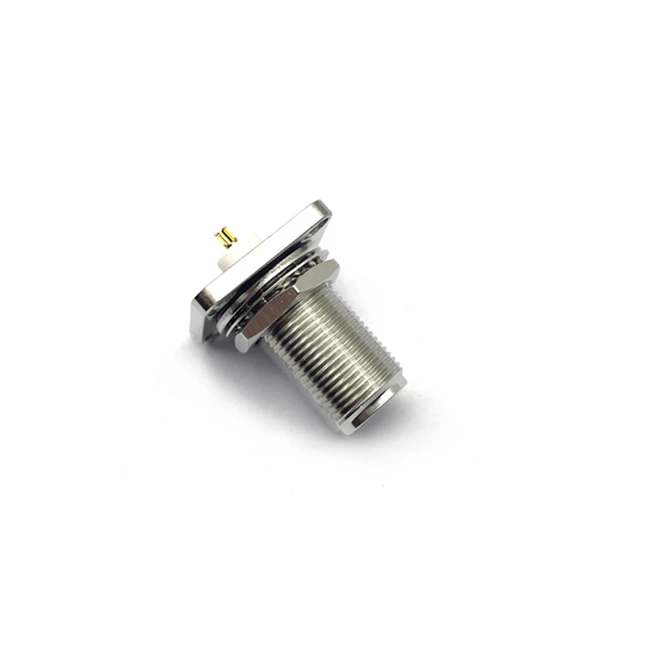

Now, if you're in the market for N Male Clamp connectors, you might be interested in some of the products we offer. We have a great selection of connectors, including the RF Connector N Male Connector for 7/8'' Cable N - J7 - 8, which is designed for use with 7/8'' cables. It's made from high - quality materials and has good chemical resistance, making it suitable for a wide range of applications.
We also have the RF Connector N Female Bulkhead Panel Mount N - 50KFD - 33 - 3 - 1, which is a great option for panel - mount applications. And if you need a connector for 1/2'' cables, check out our RF Connector N Male for 1/2'' Cable N - J1/2 - 11.
If you're looking for high - quality N Male Clamp connectors with excellent chemical resistance, we're here to help. Whether you're working on a small project or a large - scale industrial application, we can provide you with the right connectors to meet your needs. Don't hesitate to reach out if you have any questions or if you're ready to start a procurement discussion. We're always happy to talk about how our products can fit into your projects.
References:
- "RF Connectors: Theory and Practice" by Jerry Whitaker
- "Handbook of Materials for Electronics" by C. A. Harper