

Hey there, fellow tech enthusiasts! I'm an N connector supplier, and today I'm super pumped to chat about how the size of an N connector can impact its performance. N connectors are everywhere in the RF world, from telecommunications to test equipment. And let me tell you, their size matters big time!
First off, let's talk about what N connectors are. They're a type of RF coaxial connector that's been around for ages. They're known for their reliability, durability, and ability to handle high frequencies. But not all N connectors are created equal. Their size can vary, and that variation can have a huge effect on how they perform.
One of the most obvious ways size affects performance is in terms of power handling. Generally speaking, larger N connectors can handle more power. This is because they have more surface area for the electrical current to flow through. When you've got a high - power RF system, you need connectors that can handle the load without overheating or breaking down. For example, our RF Connector N Male for 1/2'' Cable N - J1/2 - 11 is a larger connector that's designed to handle higher power levels. It's great for applications where you've got a lot of power running through the system, like in some base stations or high - power transmitters.
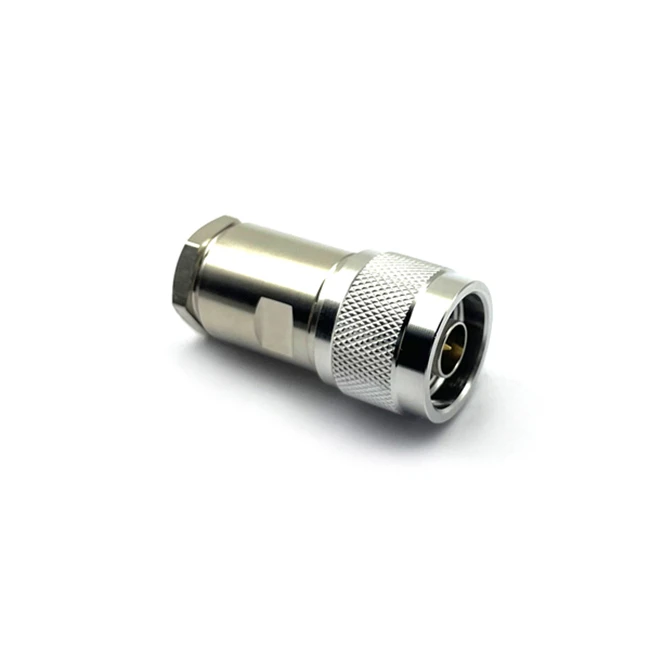

On the flip side, smaller N connectors are more suitable for low - power applications. They're often used in devices where space is limited, like in some portable test equipment or small - scale communication devices. The smaller size means they take up less room, but they also have a lower power - handling capacity. For instance, our RF Connector N Male for 5D - FB Cable Clamp Type N - J5 is a smaller connector that's perfect for these kinds of low - power, space - constrained applications.
Another important factor is the frequency range. The size of an N connector can influence the frequency at which it operates most efficiently. Larger N connectors typically have a lower upper - frequency limit. This is because the larger physical dimensions can cause some signal loss and interference at higher frequencies. They're great for lower - frequency applications, say up to a few gigahertz.
Smaller N connectors, on the other hand, can often handle higher frequencies. Their smaller size means there's less distance for the RF signal to travel, which reduces the chances of signal degradation. So, if you're working on a high - frequency project, like a 5G communication system or some millimeter - wave applications, a smaller N connector might be the way to go.
But it's not just about power and frequency. The size of an N connector also affects its mechanical properties. Larger connectors are generally more robust and can withstand more physical stress. They're less likely to get damaged during installation or when the equipment is moved around. This makes them ideal for industrial or outdoor applications where the connectors might be exposed to harsh conditions.
Smaller connectors, while not as physically tough, are more flexible in terms of installation. They can be easily installed in tight spaces, and they're less likely to add a lot of weight to the equipment. This is important in applications like aerospace or mobile devices, where weight and space are at a premium.
Let's also talk about impedance matching. Impedance is a measure of how the connector resists the flow of electrical current. For an RF system to work efficiently, the impedance of the connector needs to match the impedance of the rest of the system. The size of an N connector can impact its impedance characteristics. Larger connectors may have different impedance values compared to smaller ones. It's crucial to choose the right size connector to ensure proper impedance matching, otherwise, you can end up with signal reflections and loss of performance.
For example, in some precision test and measurement setups, getting the impedance right is crucial. Using the wrong size N connector can throw off the entire measurement. That's why we offer a range of N connectors, like the N Type Load Short Open N - 50JR - 1 N - 50JR - 1, with different sizes and impedance values to meet the specific needs of our customers.
Now, you might be wondering how to choose the right size N connector for your project. Well, it all depends on your specific requirements. If you're dealing with high power, lower frequencies, and need a robust connector, go for a larger one. If you're working on a high - frequency, low - power project with limited space, a smaller connector is the better option.
We've spent a lot of time researching and developing our N connectors to make sure they offer the best performance for different sizes. Our team of experts is always on hand to help you figure out which connector is right for you. Whether you're a small startup working on a new gadget or a large corporation building a complex RF system, we've got the N connectors to meet your needs.
If you're interested in learning more about our N connectors or ready to make a purchase, don't hesitate to reach out. We're here to provide you with top - quality products and excellent customer service. You can start exploring our product range on our website and see which N connector size is perfect for your project.
So, in a nutshell, the size of an N connector plays a crucial role in its performance. It affects power handling, frequency range, mechanical properties, and impedance matching. By understanding these factors, you can make an informed decision when choosing an N connector for your RF application. Whether it's a small - scale project or a large - scale industrial setup, the right size N connector can make all the difference.
References
- "RF Coaxial Connectors Handbook", some relevant chapter about N connectors' physical characteristics and performance.
- Industry whitepapers on RF connectors' design and application, specifically focusing on the relationship between size and performance.