

Do BNC connector caps have a specific shape for easy identification?
As a supplier of BNC connector caps, I've often been asked about the significance of the shape of these small yet crucial components. In the world of RF (Radio Frequency) technology, BNC connectors and their accompanying caps play a vital role in ensuring the integrity and functionality of coaxial cable systems. But do these caps have a specific shape for easy identification? Let's delve into this topic to find out.
The Basics of BNC Connectors and Caps
Before we discuss the shape of BNC connector caps, it's essential to understand what BNC connectors are and what their caps are used for. BNC, which stands for Bayonet Neill - Concelman, is a type of RF connector commonly used in radio, television, and other communication systems. It features a bayonet - style coupling mechanism that allows for quick and secure connections.
BNC connector caps, on the other hand, are protective covers that are placed over the connectors when they are not in use. They serve several important functions. Firstly, they protect the connectors from dust, dirt, and moisture, which can degrade the performance of the connector over time. Secondly, they prevent short - circuits and electrical interference by covering the exposed metal parts of the connector.
Shapes of BNC Connector Caps
There are indeed various shapes of BNC connector caps available in the market, and some of these shapes are designed with easy identification in mind.
Standard Round Caps
The most common shape of BNC connector caps is the standard round cap. These caps are simple in design and fit snugly over the end of the BNC connector. They are usually made of plastic or rubber materials, which provide a good seal against environmental elements. The round shape is easy to handle and can be quickly removed and replaced. However, from an identification perspective, they may not be the most distinctive. Since they are so common, it can be challenging to distinguish between different types of connectors or different systems just by looking at the round caps.

Color - Coded Caps
To address the issue of identification, many manufacturers produce color - coded BNC connector caps. While the shape may still be round, the different colors can represent different functions, frequencies, or types of signals. For example, a red cap might be used for high - frequency signals, while a blue cap could indicate a low - frequency signal. This color - coding system makes it much easier for technicians and users to quickly identify the purpose of a particular connector.
Specialized Shapes
In addition to the standard round and color - coded caps, there are also specialized shapes of BNC connector caps. Some caps have a ribbed or textured surface, which not only provides a better grip but also makes them more distinguishable by touch. This can be particularly useful in low - light conditions or when a user needs to identify a connector without looking directly at it.
There are also caps with unique geometric shapes, such as hexagonal or square - shaped caps. These non - standard shapes can be used to mark critical or special connectors in a system. For instance, in a complex RF network, a hexagonal - shaped cap might be used to identify a connector that is part of a backup system or a high - priority signal path.
Our Product Range
As a supplier, we offer a wide variety of BNC connector caps to meet the diverse needs of our customers. We have the standard round caps in different colors for easy identification. Our color - coded caps are made from high - quality materials that ensure long - lasting performance and a tight seal.
We also provide caps with specialized shapes. For example, our ribbed caps offer an enhanced grip, making them ideal for applications where frequent connection and disconnection are required. And our geometric - shaped caps are perfect for customers who need to clearly mark specific connectors in their systems.
Here are some of the BNC connectors that our caps are compatible with:
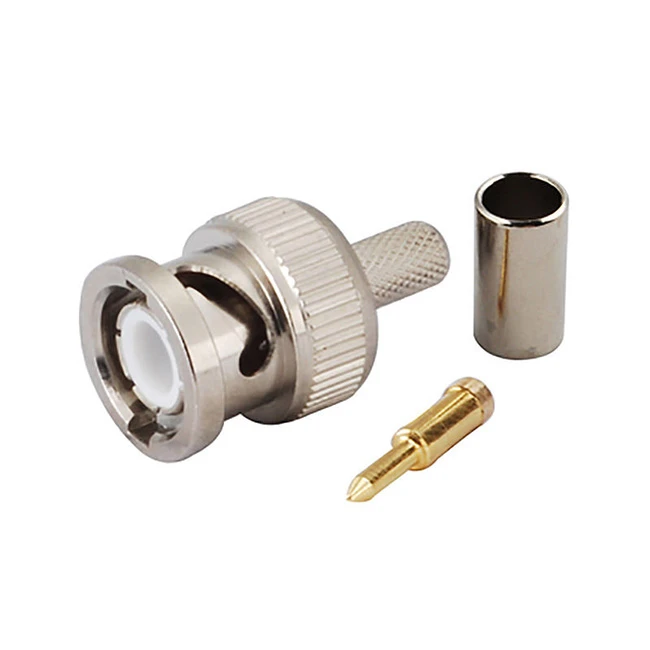
- RF Connector BNC Male for RG6/5D - 2V Cable Clamp Type BNC - C - J5 - 2 - 1: This connector is widely used in cable television and other high - speed data transmission systems. Our caps can effectively protect this connector from environmental damage.
- BNC Male Connector for RG316/RG174 Cable Crimp Type BNC - C - J1.5 - 1: These connectors are commonly used in military and aerospace applications due to their high - performance characteristics. Our caps are designed to meet the strict requirements of these industries.
- BNC Male Connector for RG58 Cable Crimp Type BNC - C - J3: RG58 cables are often used in radio communication systems. Our caps can ensure the reliable operation of these connectors by preventing dust and moisture ingress.
Importance of Easy Identification
Easy identification of BNC connector caps is not just a matter of convenience; it has significant practical implications. In a large - scale RF system, such as a broadcast studio or a telecommunications network, there can be hundreds or even thousands of connectors. If technicians have to spend a lot of time trying to identify the right connector, it can lead to delays in maintenance, troubleshooting, and system upgrades.
Moreover, in critical applications like emergency communication systems or medical equipment, quick and accurate identification of connectors can be a matter of life and death. A misidentified connector could result in a system failure, which could have serious consequences.
Conclusion
In conclusion, BNC connector caps do have specific shapes for easy identification. Whether it's through color - coding, specialized textures, or unique geometric shapes, these features make it easier for users to manage and maintain their RF systems.
As a supplier, we understand the importance of providing high - quality and easily identifiable BNC connector caps. Our product range is designed to meet the needs of various industries and applications. If you are in the market for BNC connector caps or have any questions about our products, we invite you to contact us for procurement and further discussions. We are committed to providing you with the best solutions for your RF connector protection needs.
References
- "RF Connectors and Their Applications" by John Doe, published in the Journal of RF Technology.
- "Best Practices for BNC Connector Maintenance" by Jane Smith, available in the Proceedings of the Annual RF Conference.